


About Participation
in the ICI Program
International Chado Institute (ICI)
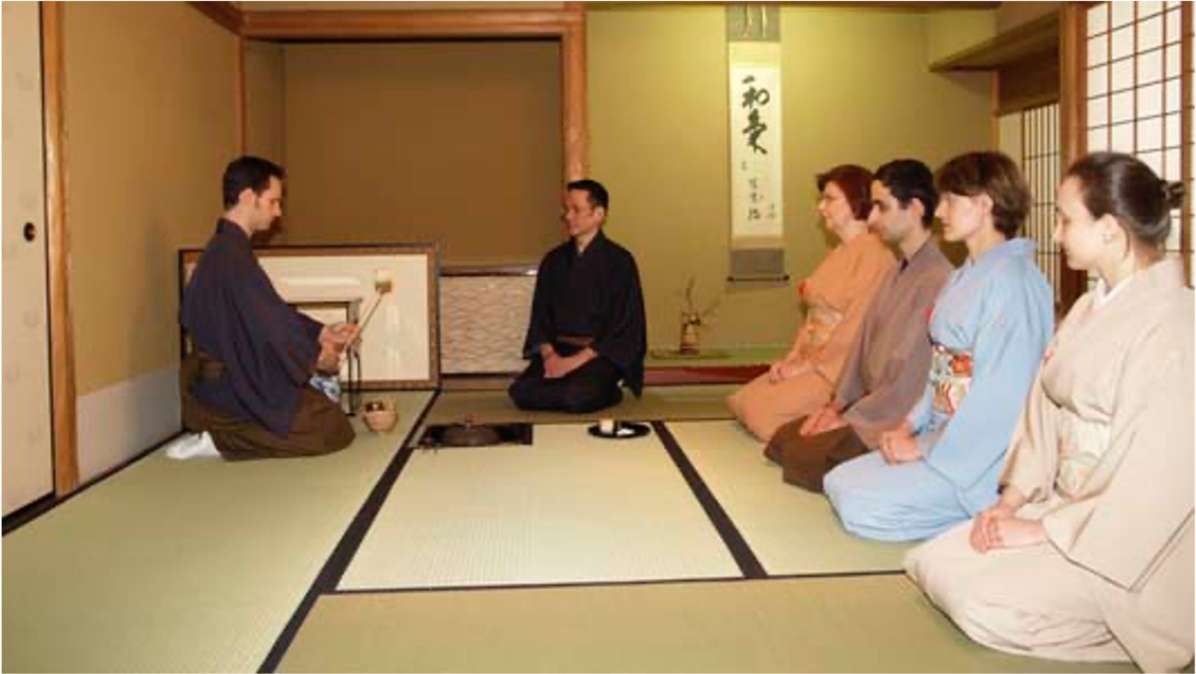
Since April, 1980, Urasenke, one of the largest schools of chado in Japan, has been offering a special program in English at the Headquarters in Kyoto for non-Japanese people interested in learning more about chado and Japanese culture. The classes are open to those able to attend classes and events in Kyoto, Japan. The program details and application requirements are as follows.
| Venue : | Urasenke Konnichian Kamigyo-ku, Ogawa Teranouchi agaru |
|---|---|
| Dates : | Two Saturdays per month (excluding January and August) |
| Times : | 9:00 a.m. – 12:00 p.m. |
| Fees : | ¥10,000 membership fee (one year), plus ¥3,000 practice fee (per class attended) |
| Language : | Japanese and English |
| Activities : | Practice session (keiko) to learn tea procedures Headquarters events, tea gathering and practica |
| Attire : | Kimono not necessary Business-casual attire is requested. Jeans and T-shirts are not appropriate. Have a pair of clean socks to wear in the tea rooms. |
| Conditions : | One-year commitment |
| Certificate : | Students can apply for beginner level and intermediate level certificates of permission (kyojo), based upon their progress. |
| To apply : | Download and fill in the application form below. Attach a recent photo. Contact the Urasenke Gakuen office to schedule an entrance interview. |
| Contact : | International Chado Institute Urasenke Gakuen Professional College of Chado Tel: (075) 415-0045 Fax: (075) 415-0053 urasenke_ici@urasenke.or.jp |


